
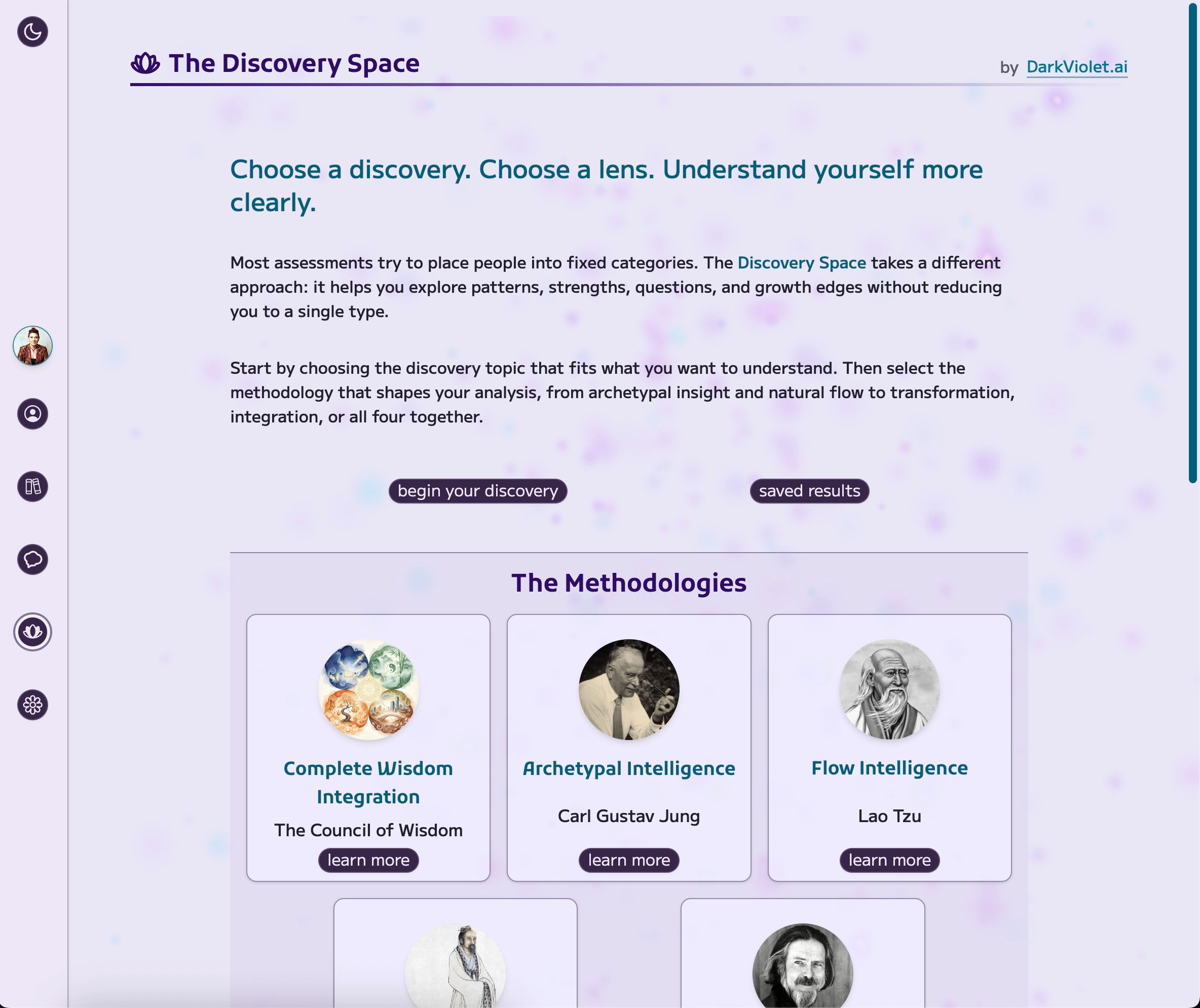
The Discovery Space: Guided Self-Discovery Through Ancient Wisdom
A look at the Discovery Space, a guided self-discovery platform that pairs focused reflective assessments with a choice of four wisdom methodologies drawn from Carl Jung, Lao Tzu, Zhuangzi, and Alan Watts. These panels cover how the methodology layer changes everything, how the question and analysis experience works, the Council of Wisdom that runs all four lenses at once, and what makes this kind of self-discovery feel different from the assessments most people have already forgotten.
Reflection, Not Classification
Most self-assessment tools assume the goal is to sort you into a category. You answer, you get a type, and the type is supposed to explain you.
The Discovery Space starts from a different premise. The goal is reflection, understanding one specific thing about yourself at a specific moment.
The Methodology Layer
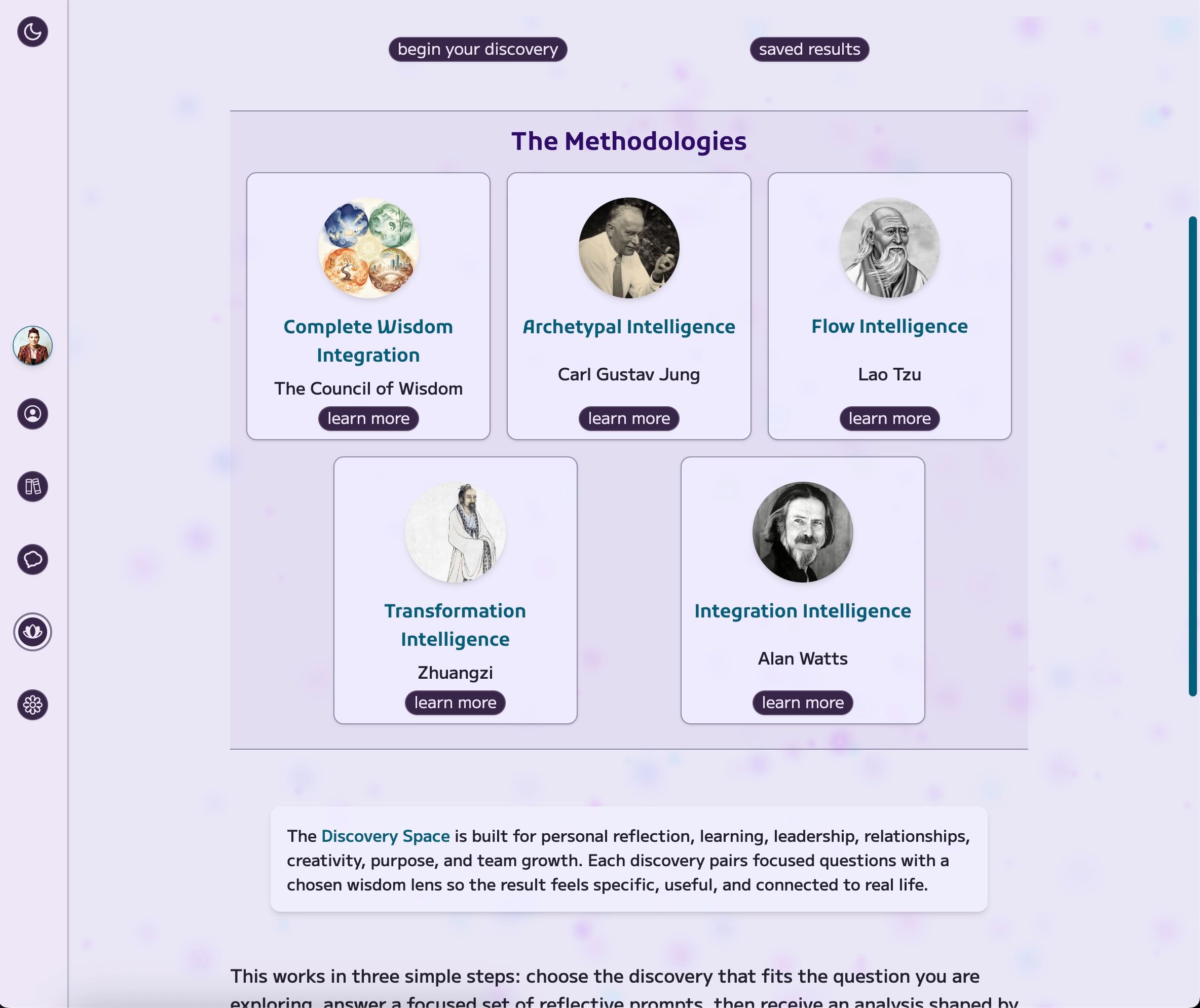
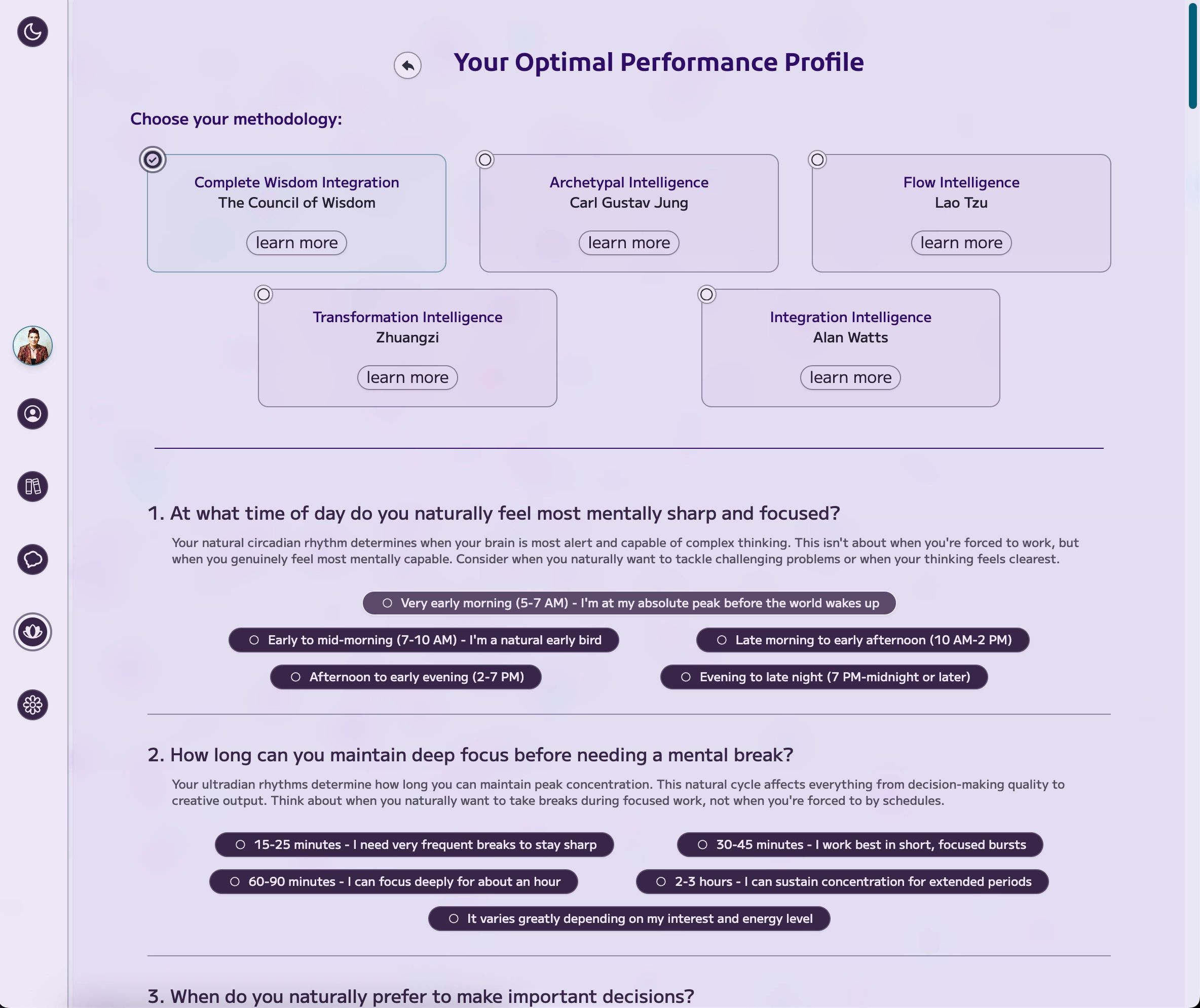
Most reflective tools apply one framework to everyone. Here you choose the lens, and the same honest answers produce genuinely different results.
- Archetypal Intelligence (Carl Jung): recurring patterns in your identity.
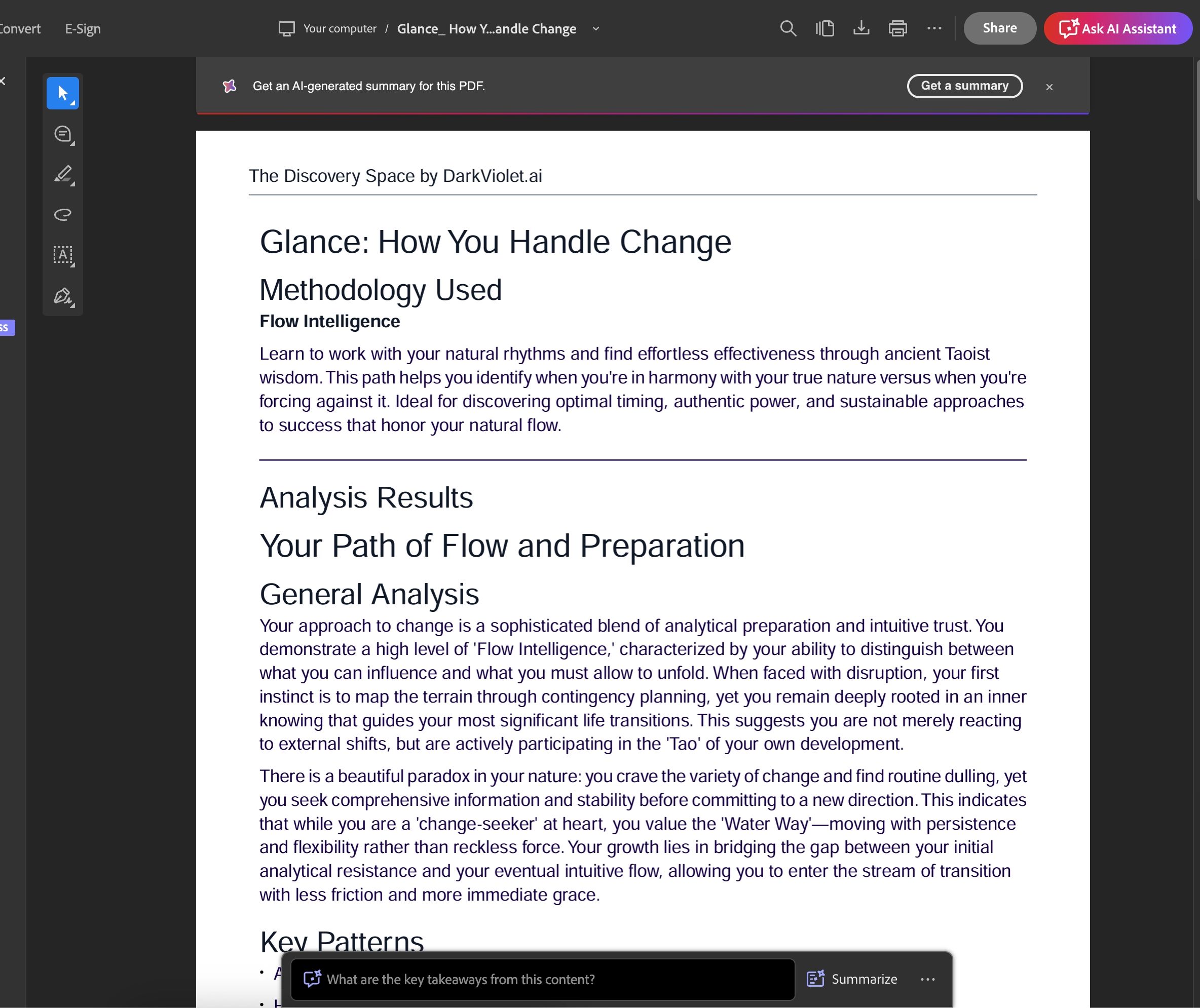
- Flow Intelligence (Lao Tzu): timing, energy, and where resistance lives.
- Transformation Intelligence (Zhuangzi): adaptability and perspective shifts.
- Integration Intelligence (Alan Watts): inner life bridged with the outer world.
The Council of Wisdom
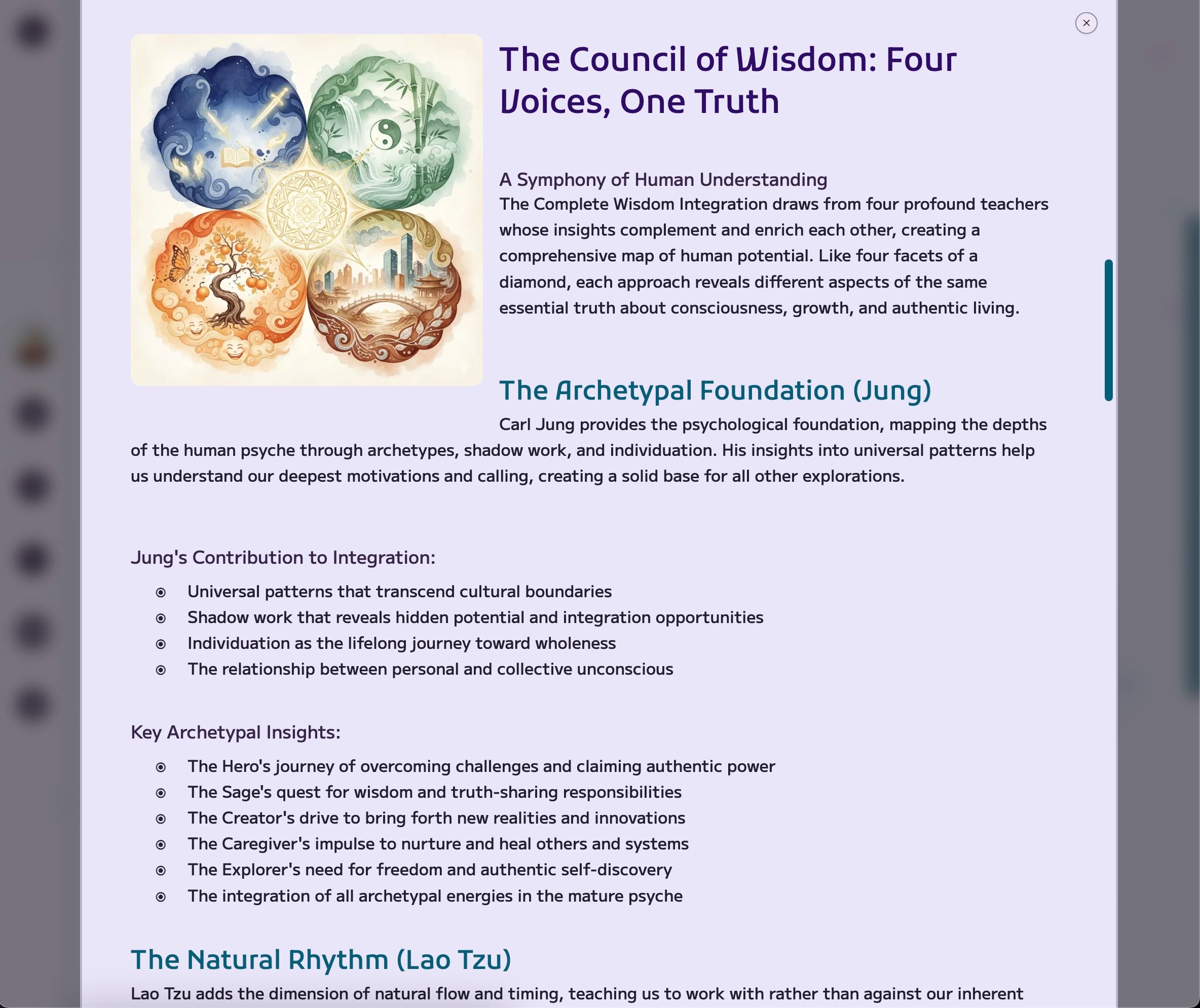
A fifth option, Complete Wisdom Integration, runs all four methodologies against your responses and weaves them into one analysis.
Jung might surface an archetypal tension, Lao Tzu might read it as an energy drain, Watts might tie it to a relationship, and Zhuangzi might reframe it entirely. None cancels the others, and together they show genuine complexity.
The Discovery Library
The library spans most questions people carry: identity and purpose, performance, leadership, relationships, creativity, decision-making, resilience, and life transitions.
The width is intentional. Self-understanding is not a single topic, so the library meets people where their question lives.
Glances: A Shorter Entry Point
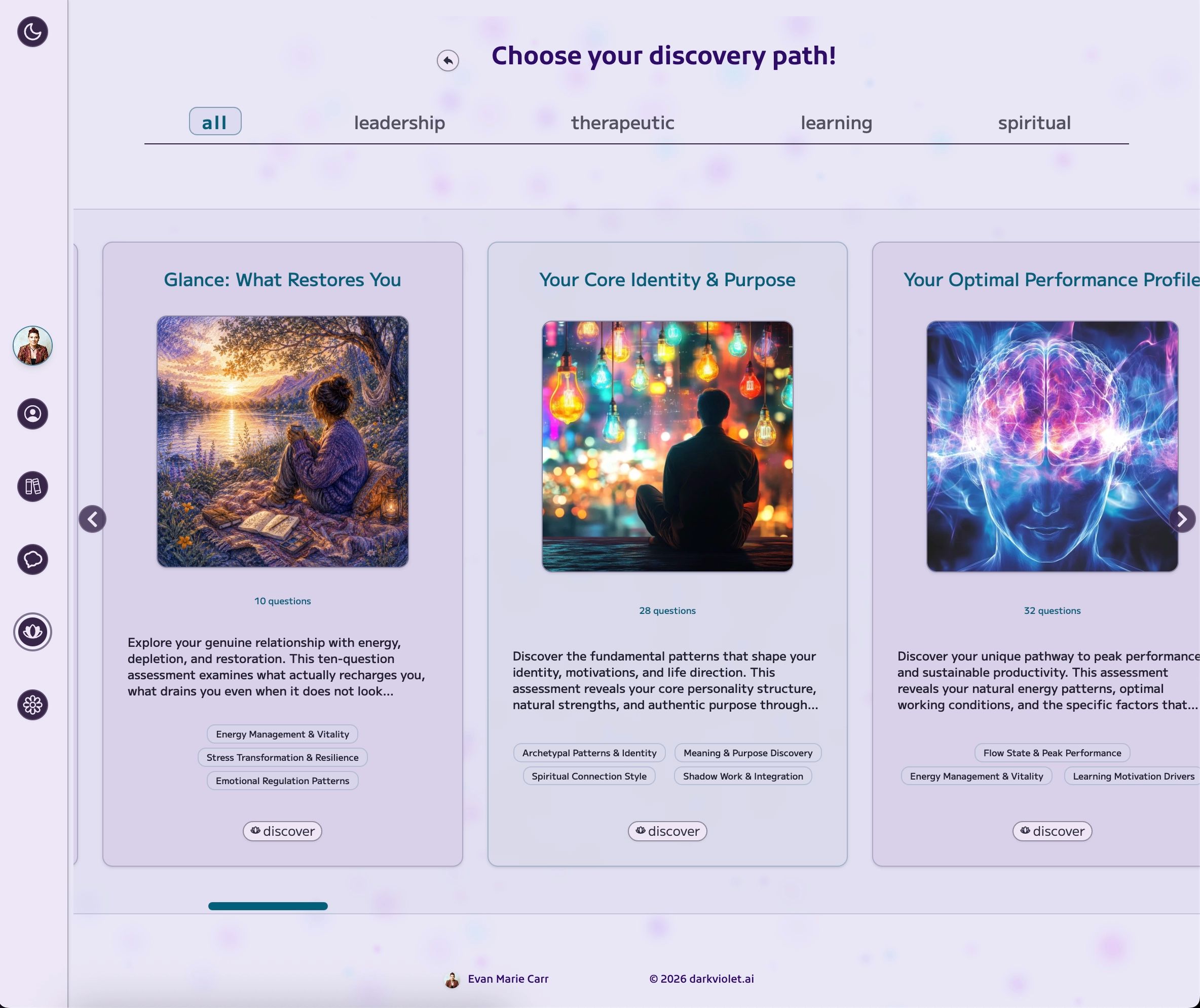
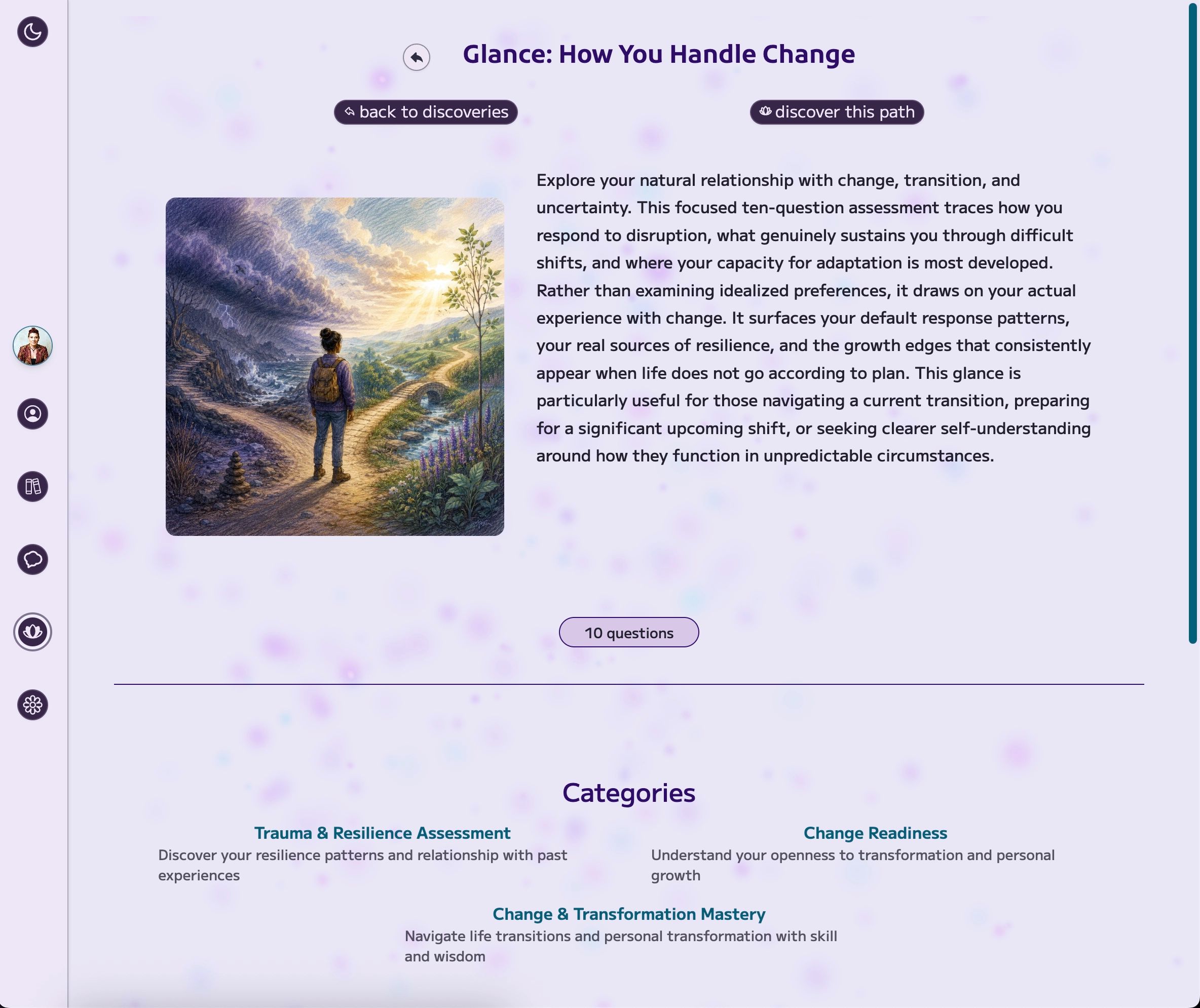
Not every question needs a thirty-question deep dive. Each Glance is ten questions on a tightly scoped topic, like how you handle change or what restores you.
They are purpose-built for their scope, not simplified assessments, and they make a natural first way in.
The Question Experience
A reflective assessment is only as good as the reflection it inspires. The questions push past the idealized self you might present on a standard form.
They ask how you actually responded to disruption, not whether you like change. That specificity gives the analysis real content to work with.
The Analysis
The engine generates a reflection shaped entirely by your chosen methodology. There are no type labels, scores, or radar charts.
What comes back is writing that references what you said and surfaces real patterns. The specificity is what separates insight from a horoscope.
Complete Wisdom Integration in Practice
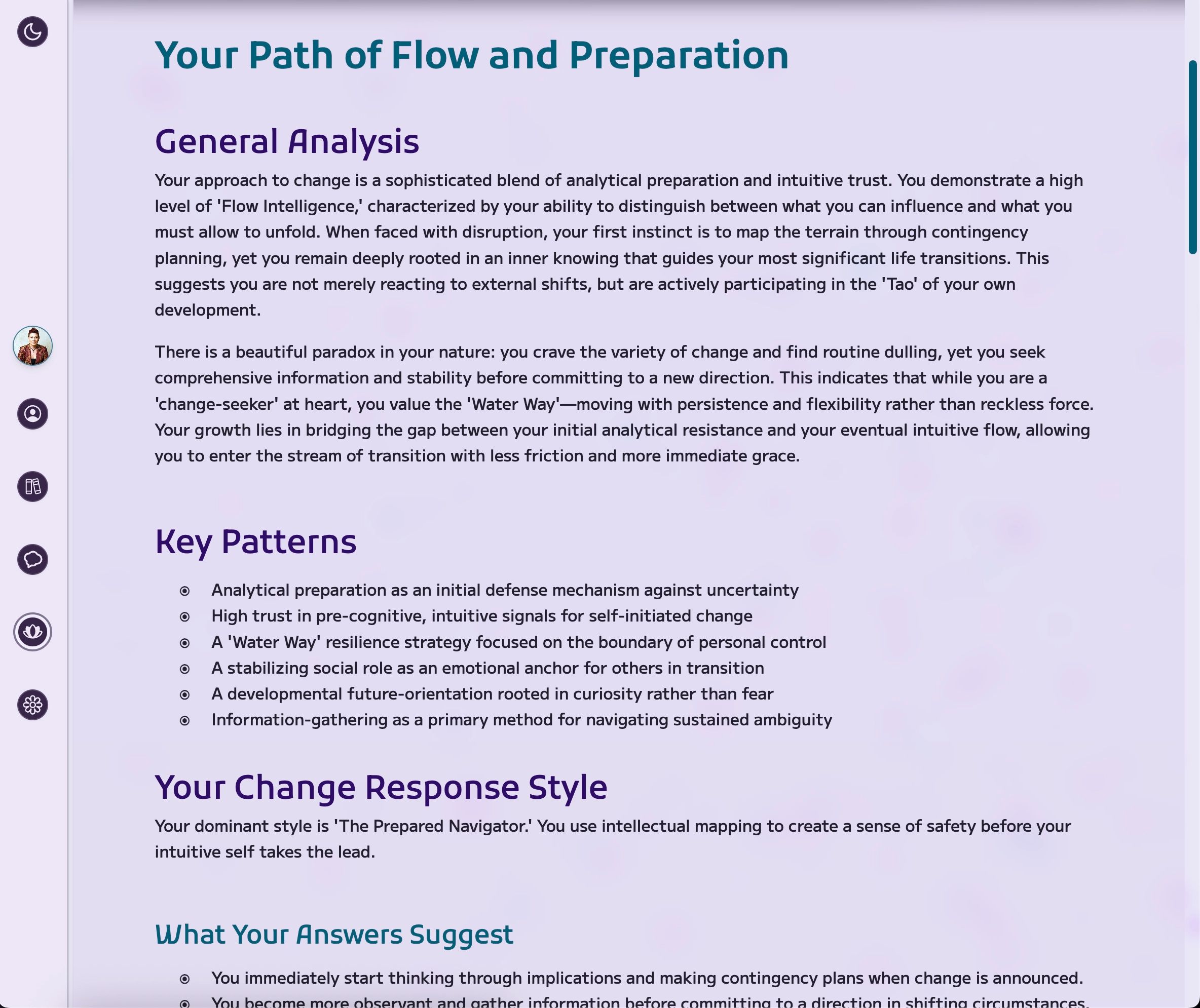
A Council result layers a Jungian reading with a Taoist note on resistance, a Zhuangzi reframe, and a Watts reflection on your relationships and context.
The synthesis is more than four stacked analyses. It surfaces where the perspectives converge and where they productively diverge.
Saved Results
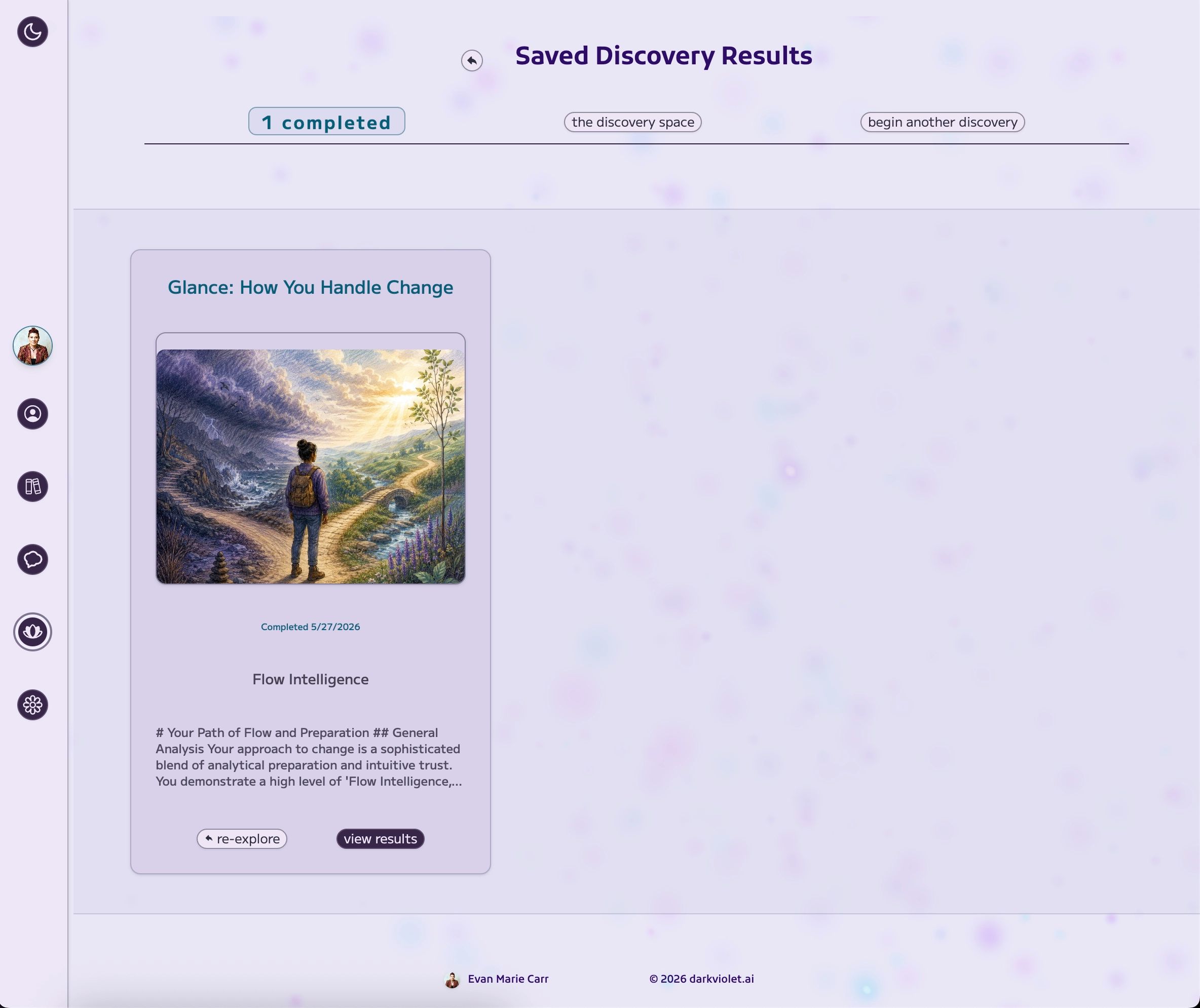
The platform saves results so you can return to them. The same question explored months apart produces different answers worth comparing.
You can download a PDF and come back later, when the analysis often reads differently with some distance.
Where It Works Best
The Discovery Space is built for personal reflection, leadership development, learning, relationships, creative direction, and team growth. Personal reflection is the most common use, giving language to something you already sensed.
The same architecture works for people responsible for others. Managers get more humane language for a working style, HR teams use it in onboarding and development, and coaches use a completed result as a starting point. Every discovery stays developmental, not a clinical instrument or a hiring gate.
Custom Discoveries and Methodologies
No fixed library can anticipate every team's question, so the platform supports two kinds of custom work. A custom discovery is a tailored set of questions built around a specific goal, and it can be white-labeled.
A custom methodology works on the deeper layer. An organization can have a wisdom lens built around its own leadership model, framework, or values, so the analysis speaks in language it already uses.
What Makes This Different
The common feedback is that the results feel personal and insightful. That comes from three pillars: targeted questions, a methodology shaped by a real intellectual framework, and an engine working from both.
No tool replaces serious therapeutic work or long-term self-reflection, and The Discovery Space does not try to. It creates a structured entry point for reflection and returns something worth sitting with.