

Lumi Forge: Turning Static Content Into Active Exploration
A brief look at Lumi Forge, an AI-powered platform that turns books, courses, articles, and videos into interactive experiences. These panels cover the content hierarchy that shapes the material, the Explorations and swipeable Micro-Explorations Explorers move through, the six Lumination types and five knowledge games built from them, the content-grounded AI companion in every Exploration, and the Creator Studio that builds a full experience from one upload.
The Experience Layer
Most platforms hand you a file and wish you luck. You read a PDF or watch a video, and the information slides off, because the format is passive while your mind wants to engage.
Lumi Forge is an experience layer that sits on top of content you already have and turns it into something you actively explore.
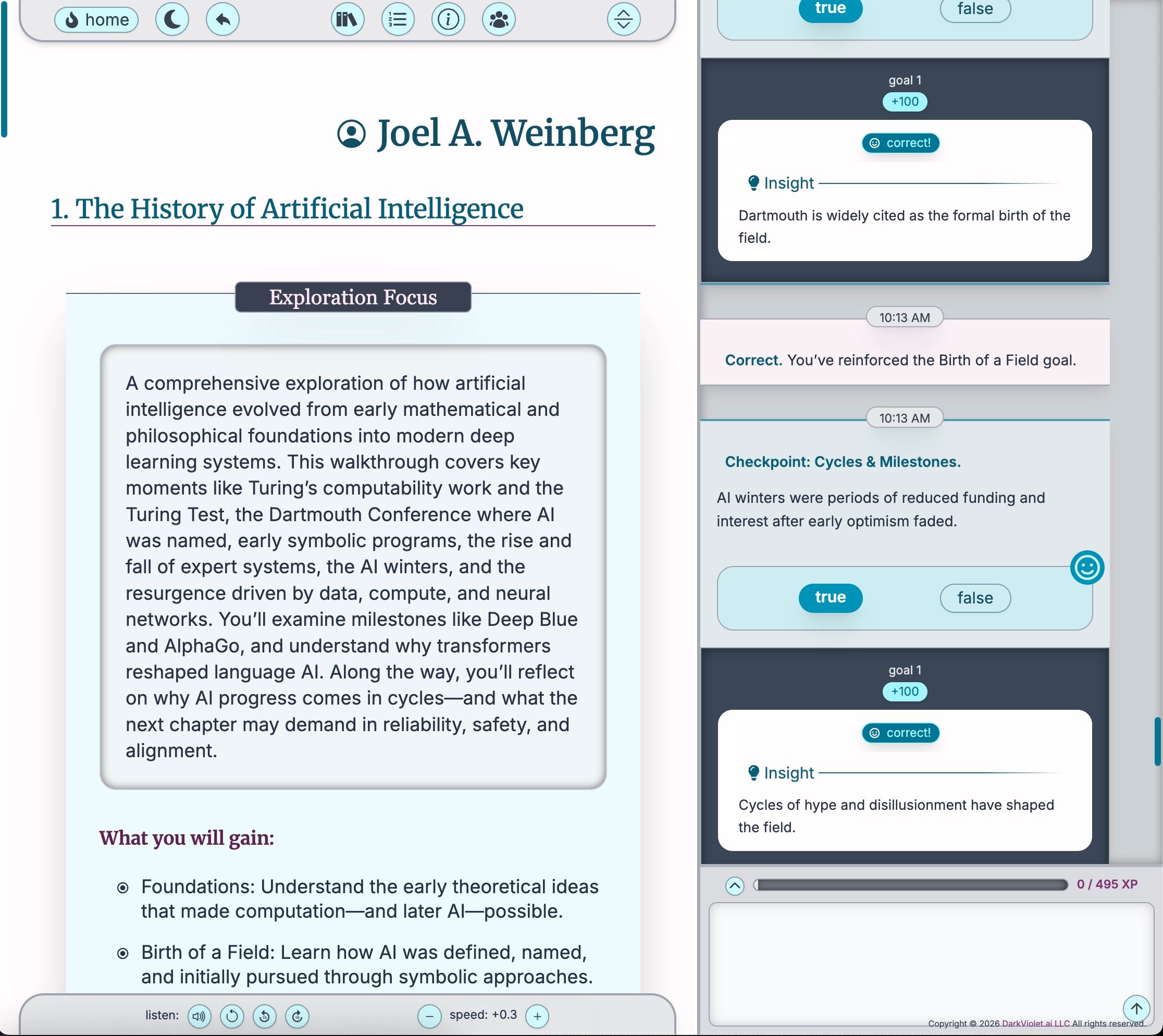
The Content Hierarchy
Everything nests inside a clear structure, flowing from the broadest idea down to the smallest interactive moment.
- Resources: the full body of work, a book, course, or collection.
- Explorations: deep, interactive journeys through a section.
- Micro-Explorations: fast, swipeable, card-based learning.
- Luminations: the interactive atoms that power everything.
- Games: replayable challenges built automatically from your content.
Each layer has a job, and together they give content a shape designed to make it stick.
Resources and Highlights
A Resource is the container for a complete work, with its own cover, description, and table of contents. Your progress saves automatically, so you always return where you left off.
Before committing time, Explorers see Highlights, bite-sized previews drawn from the material that answer one question: is this worth my attention?
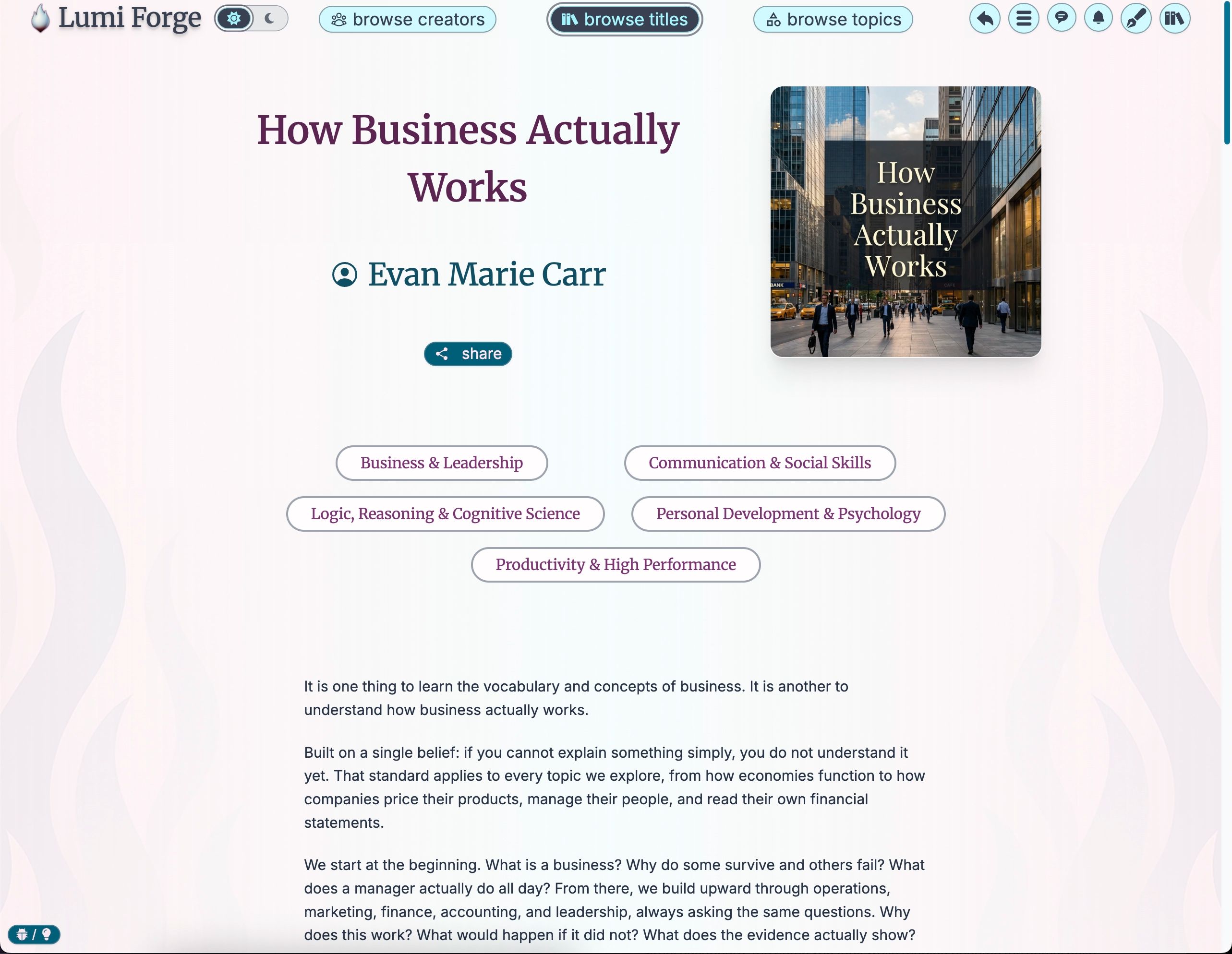
Explorations: The Deep Dive
An Exploration turns a chapter or theme into an immersive, interactive journey. The path is nonlinear, so Explorers move at their own pace and follow what interests them.
Every interaction earns experience points toward a completion target, and progress is saved at every step.
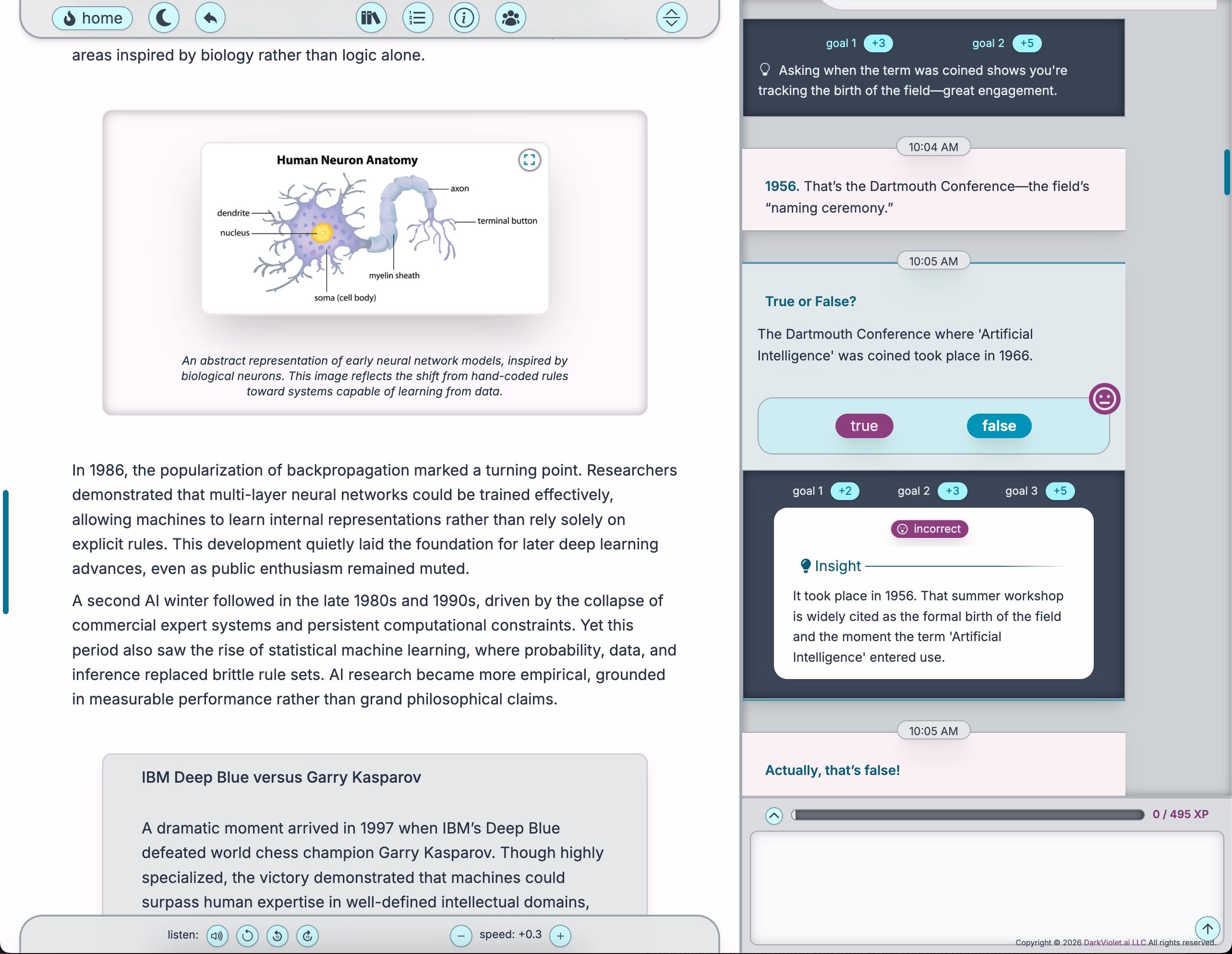
The Interaction Panel
Beside every Exploration sits an interaction panel with an AI companion scoped to that specific content. It knows the structure, the goals, and the creator's exact language.
Explorers can ask for a concept in different words, connect a new idea to an earlier one, or request the next checkpoint when ready.
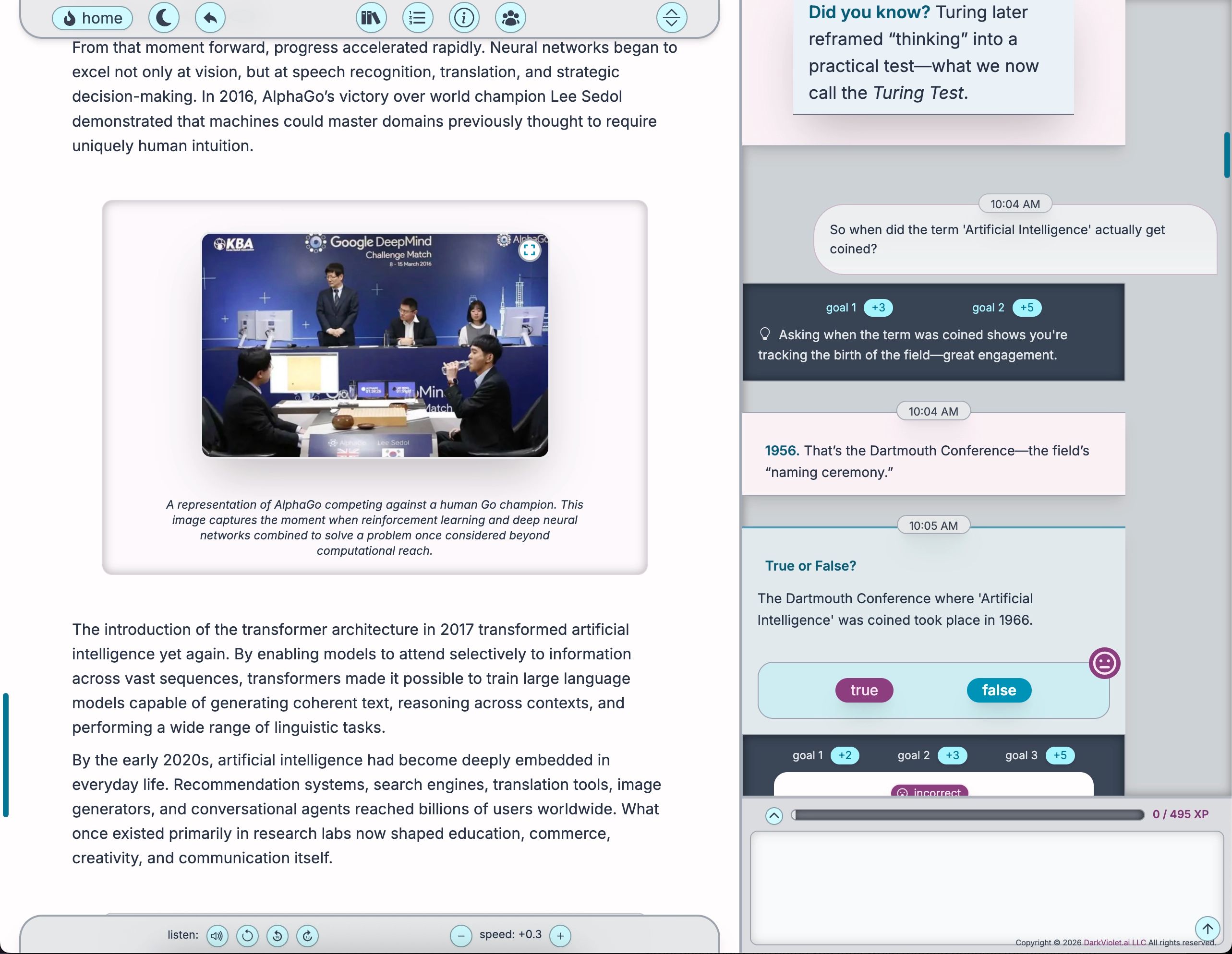
Doom Scrolling for Good
Micro-Explorations take the swiping habit we already have and point it at knowledge. Each session is a tight feed of cards.
Swipe right when a concept lands, left to revisit it. A review phase brings back what you missed, using spaced repetition to make it stick.
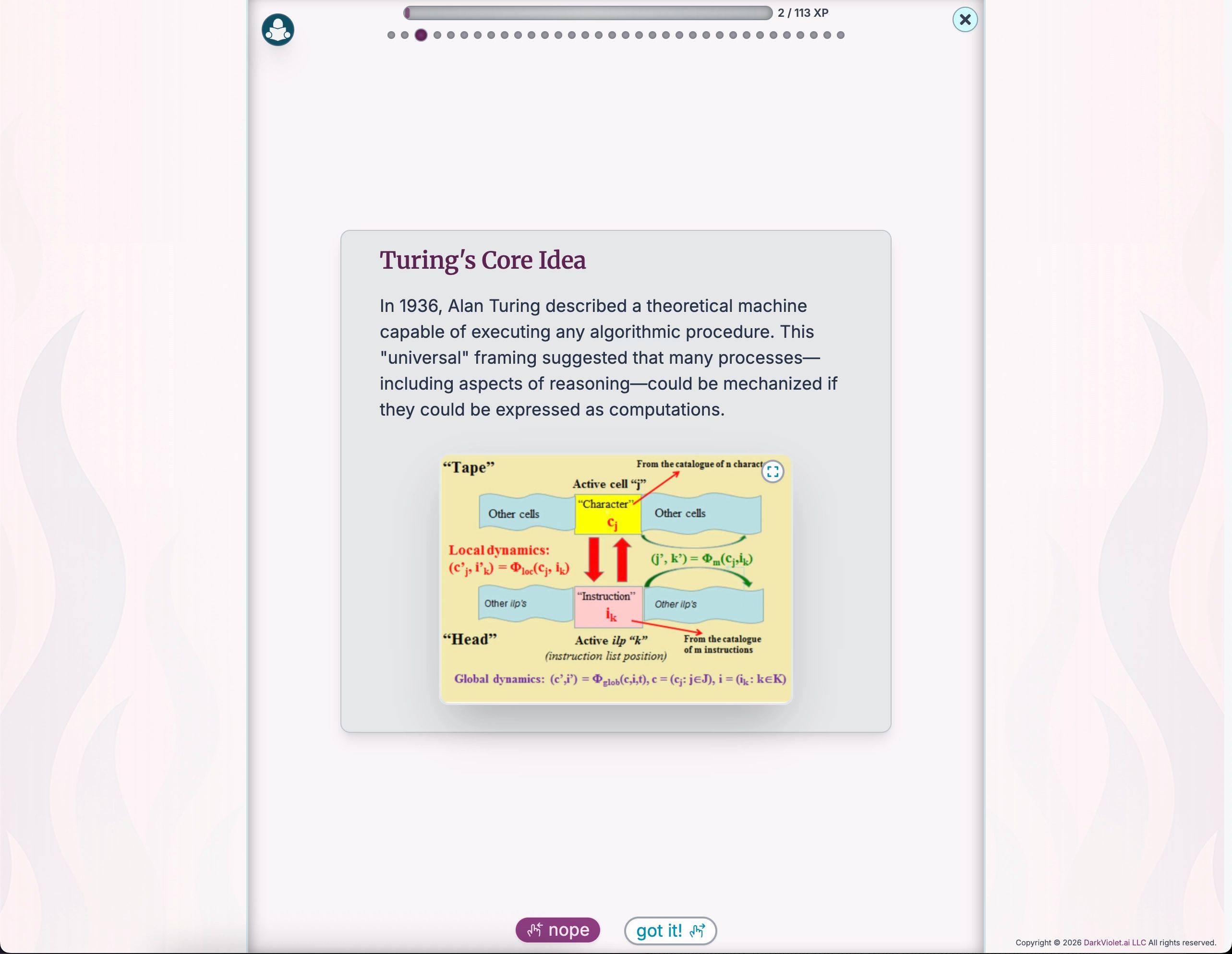
Luminations: The Six Types
Luminations are the interactive atoms of the platform. The same element works as a checkpoint inside an Exploration, as a card inside a Micro-Exploration, and as game content. There are six types:
- Information: delivers a concept or image.
- Multiple Choice: checks recognition.
- True/False: rapid checks and myth-busting.
- Fill in the Blank: forces memory retrieval.
- Short Answer: tests explanation in your own words.
- Reflection: connects ideas to your own life.
For open-ended answers, the platform's AI evaluates responses against the stated learning goals and rewards genuine engagement.
The Knowledge Games
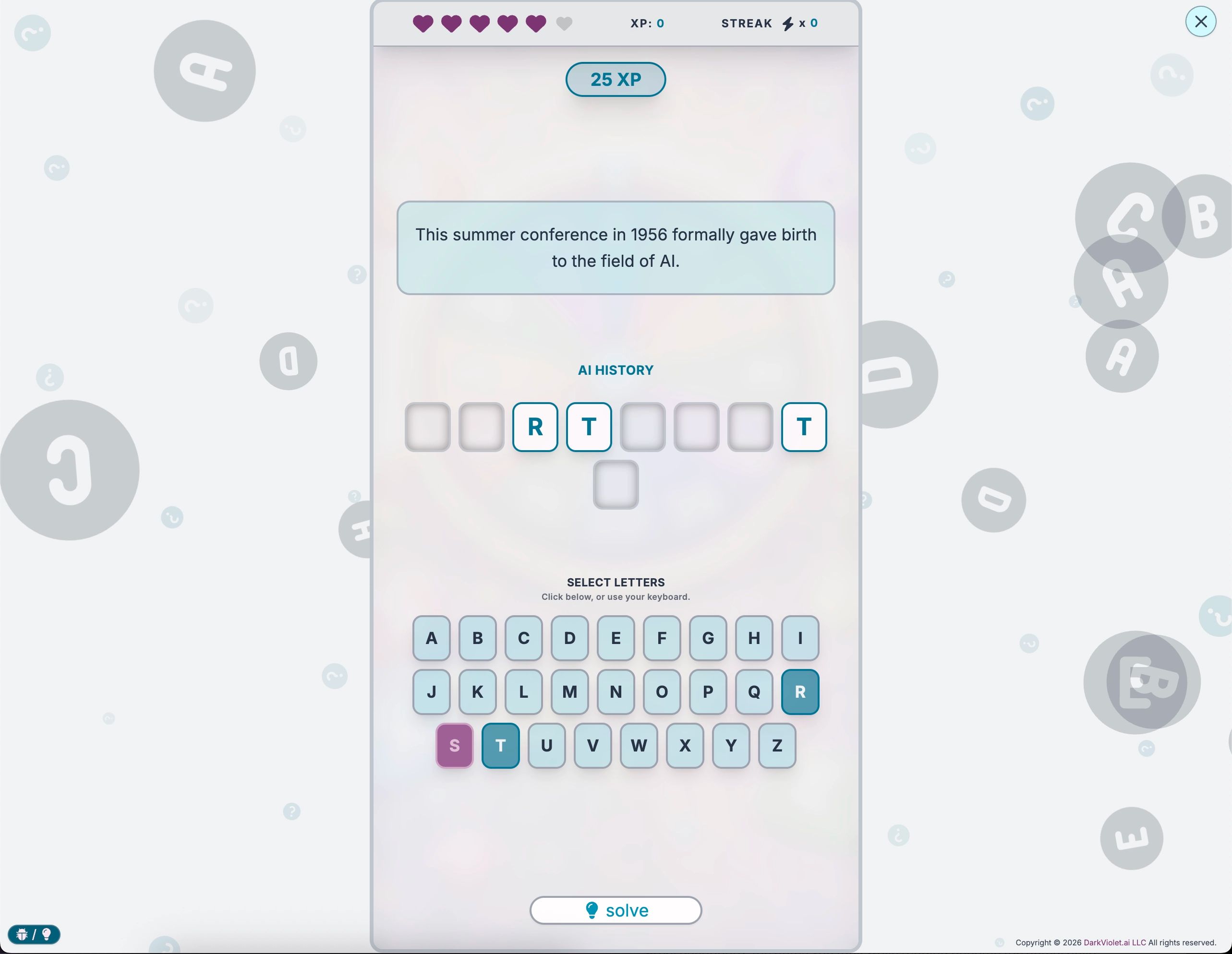
Every Lumination automatically becomes game content, so creators build nothing extra. Five games turn the same checkpoints into play, with XP, streaks, and lives.
Thumbs handles true/false, Think Fast handles multiple choice, Letter by Letter rebuilds terms, Synthesis tests recall under pressure, and The Prism opens space for reflection.
Experience Points
XP on Lumi Forge measures honesty, not intelligence. It tracks how many moments you engaged with sincerely rather than how many you got right on the first try.
A wrong answer never locks you out. You see why it did not hold up and move on with more understanding. Even flagging a card for review earns points, because noticing what has not yet stuck is the behavior of someone genuinely trying to learn. The system rewards the struggle, because comprehension happens in the grappling.
The Creator Studio
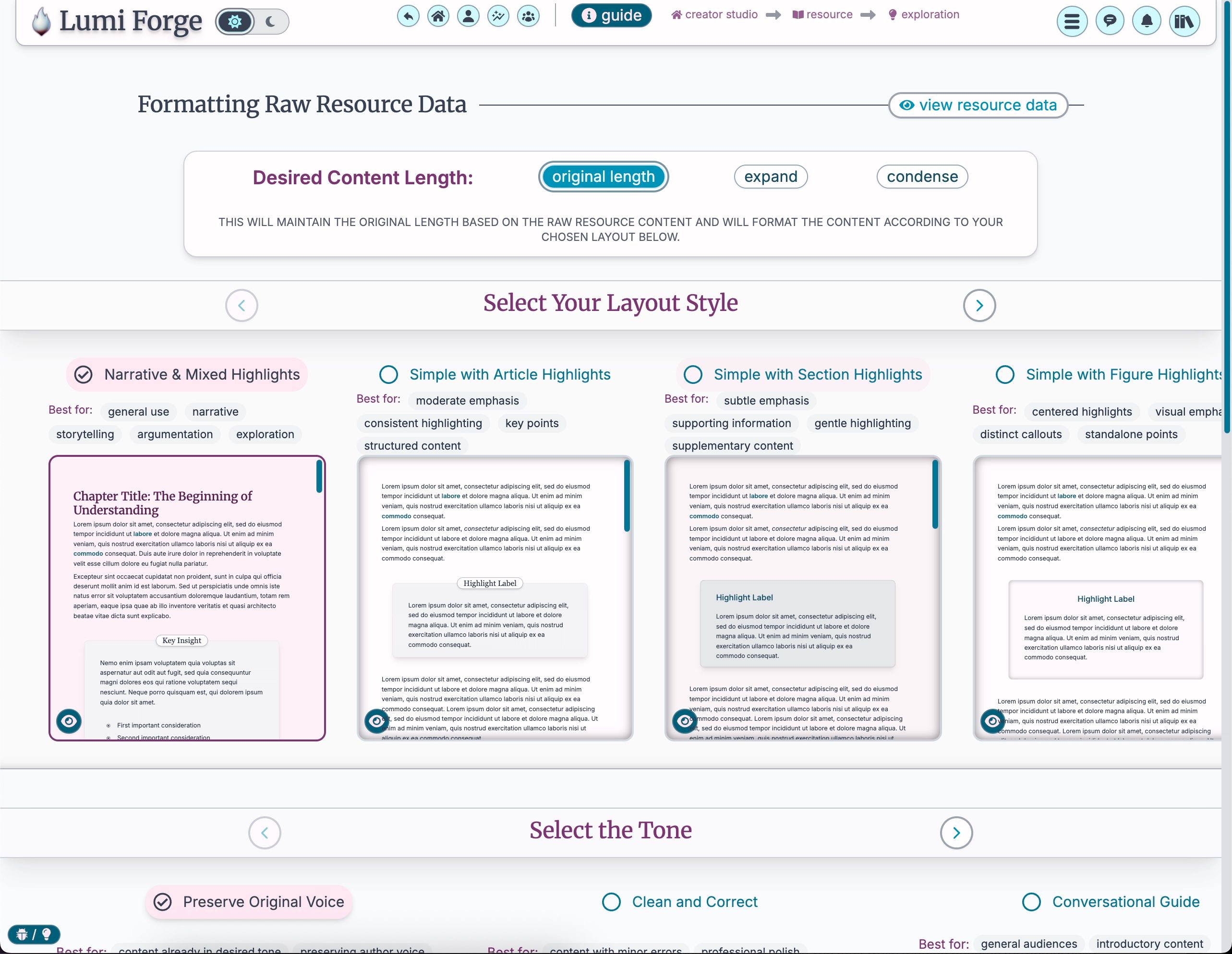
Creators upload a PDF, paste text, or drop in a YouTube link, and the system pulls the transcript automatically. From there, the Creator Studio handles the heavy lifting.
From one section, it generates a polished Exploration, forty-five Luminations, three Micro-Explorations, and content for all five games. Creators set length, layout, and tone, then refine anything they like.
The User Journal
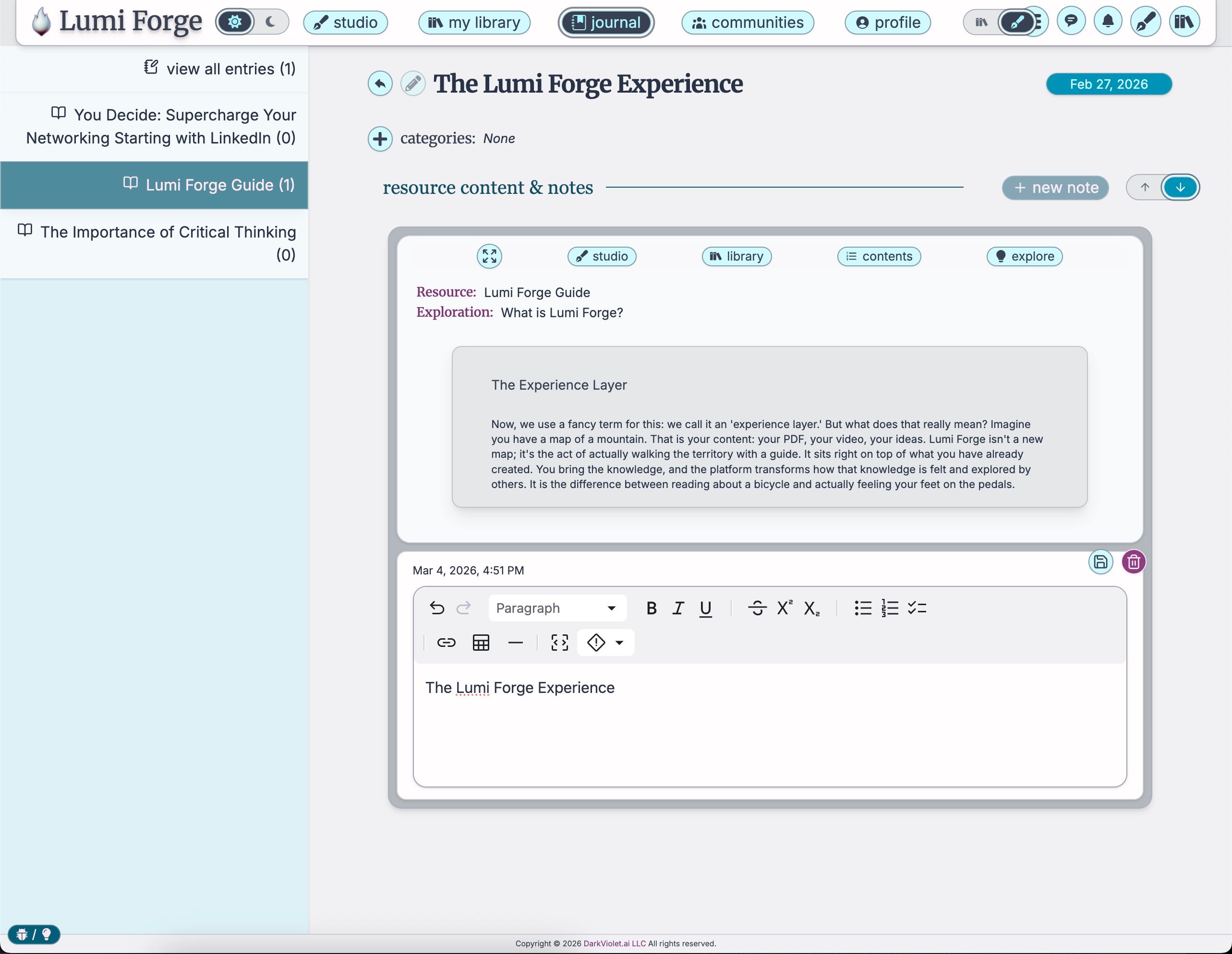
Select any passage while reading and the Journal captures it along with its exact source. Your note stays anchored to the Resource, Exploration, and part it came from.
The journal dashboard supports full Markdown, turning scattered highlights into a personal, source-linked web of understanding. Creators use it to collect ideas for their next work.
Communities and the Bigger Picture
Every Resource has its own community board where the creator hosts conversation, posts updates, runs polls, and links discussion directly to specific Explorations. Learning becomes social and grounded in the material.
Trust sits underneath all of it. Creators keep full ownership of their work, and the AI is never trained on their content. The larger goal is a curiosity renaissance, a place where people connect over genuine discovery rather than distraction. Whether you create or explore, that is the world Lumi Forge is built to support.