

AI for Learning: Amplifying the Way We Learn and Teach
I am passionate about the benefit that human-centered AI offers us for educating ourselves and others. AI's role in education should be amplification, using the technology to make us sharper and more engaged. Let's take a journey through the concrete, walking through how the AI for Learning demo on DarkViolet.ai works as a live example you can try for yourself, and briefly how the same ideas scale up inside Lumi Forge. The throughline is the human in the loop, the human being amplified.
What AI Is Actually For
What is AI actually for? I don't hear many people ask that. The conversation generally just splits into two loud camps, one giddy that machines will soon do our thinking for us, the other braced for the day we outsource our brains and forget how to think at all. Both sail right past the more interesting and beneficial path..
AI's purpose comes down to one word: amplification. The kind of AI I believe in is human-centered, which is a plain way of saying it works to make us better, to build us up and improve our lives, to help us dive more deeply into our own ideas and thoughts and knowledge, never to detach us from the human experience.

Amplification, Not Replacement

AI should amplify what a person can do and never quietly take over the part that makes us who we are. The thinking, the remembering, and the wrestle with a hard idea all belong to the learner. The machine can carry the rest.
A tool built to do the work for you produces a human who finishes something but learns nothing. A tool built to support the human produces understanding and a strong foundation for further knowledge-building.
Learning Can Be Hard for Imaginative Minds
You can read every word on a page and remember almost none of it a few minutes later. That is not a failure of intelligence or attention. An imaginative mind likes to multitask, and a flat page gives it too much room to wander.
We built our whole information diet around delivery, dropping an idea in front of someone and expecting it to be absorbed. But I firmly believe that it is engagement and exploration that transform information into knowledge.

From Consuming to Doing
What we know about memory is stubbornly simple. We hold onto the things we have to reach for, the things we play with, immerse ourselves in, and interact with. Retrieval, self-testing, and returning to the source with a sharper question are the moves that turn information into knowledge.
This is where AI earns its keep. It can take a flat piece of source material and reshape it into something we move through actively, one idea at a time, at our own pace. The reading becomes a conversation instead of a monologue.
You Can Try It Yourself
If you would like to experience this in real time, I have built a small demo you can try right now called AI for Learning. It puts human-centered AI to work in the most literal way I could manage, beginning with your material, not mine and not the model's. You upload a PDF or paste in some text, and the system does the rest.
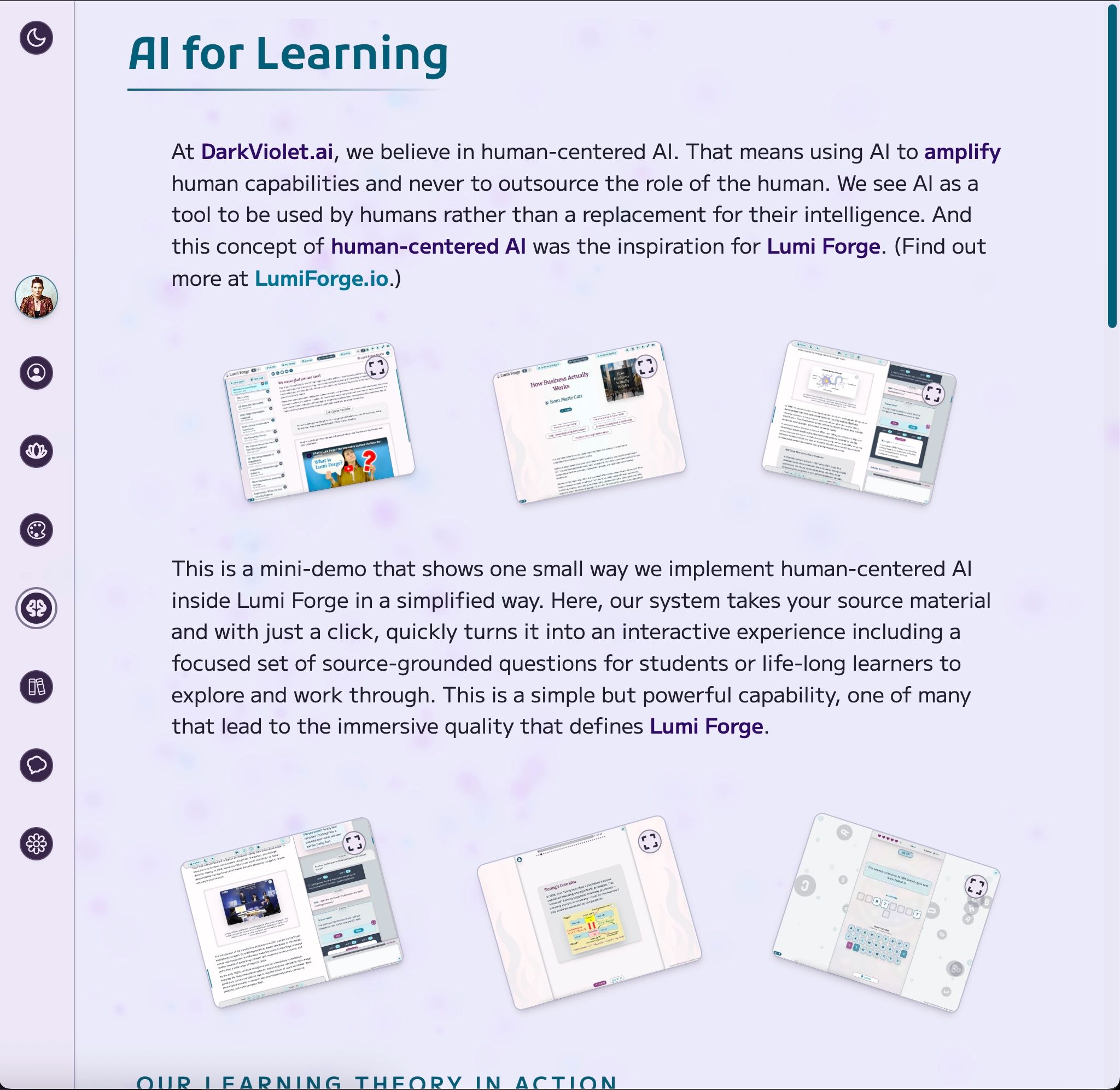
Starting from your own source is the important part. The interactions you are about to get come straight from the words you handed over, not from some vague training soup the model half-remembers. This focus is required for AI to be truly helpful in amplifying our learning experiences.
Shaping the Practice
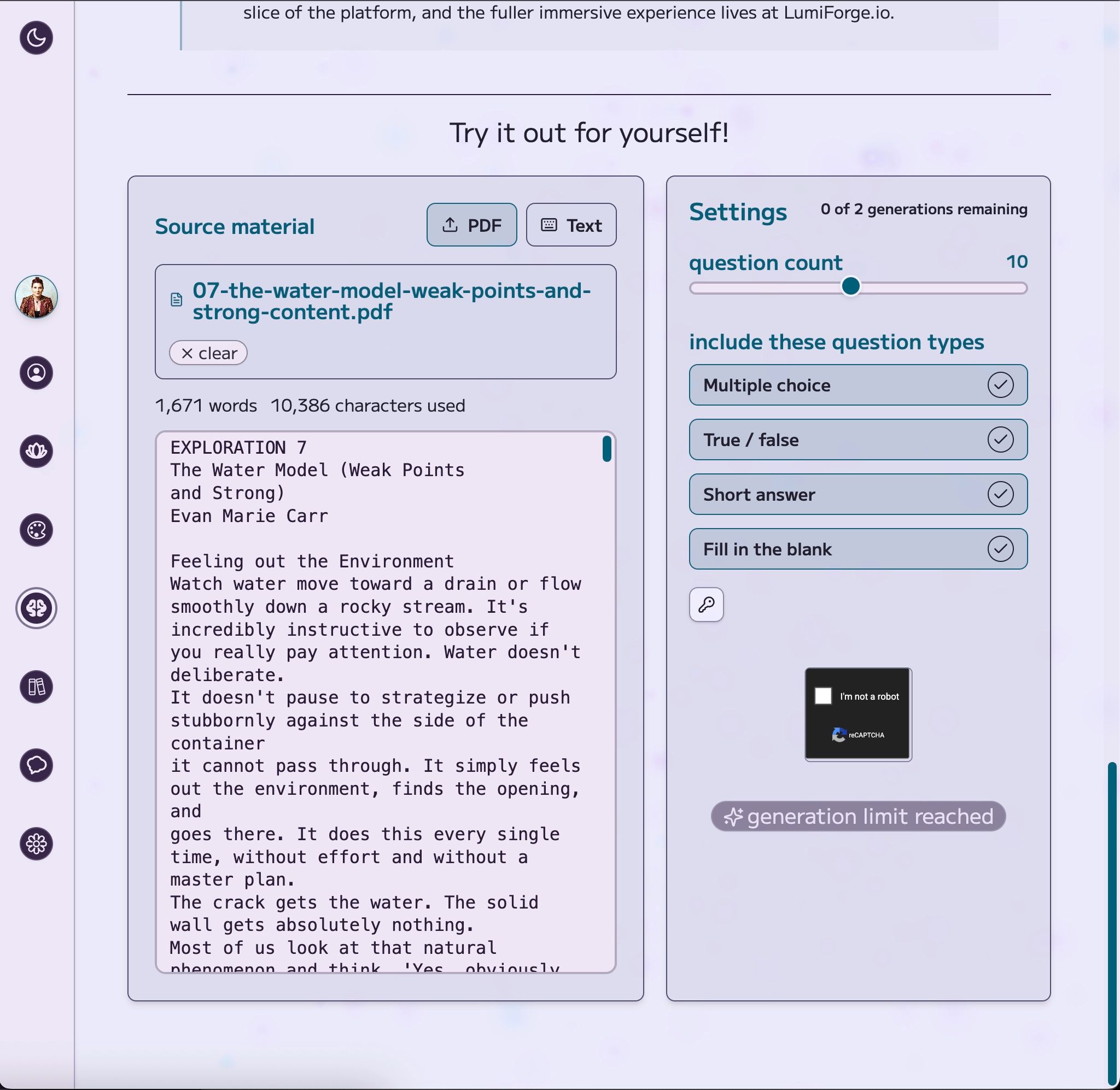
You get to decide the shape of the practice. You choose how many questions you want and which kinds to include from four types: multiple choice, true or false, short answer, and fill in the blank. The demo then balances the set across whatever you selected.
Each type asks something different of your brain, which is the whole reason to offer more than one. Fill in the blank makes you pull a word from memory, and short answer goes deepest, because explaining an idea in your own words is the moment you find out whether you truly understand it.
Grounded In Your Own Truth
There is a failure mode with AI that worries me, the one people bring up most when AI for learning comes up. The model wanders off, invents a lesson loosely related to your material, and hands you a confident little falsehood with a perfectly straight face. In a learning tool, that does real harm, because it teaches you something unintended or even false.
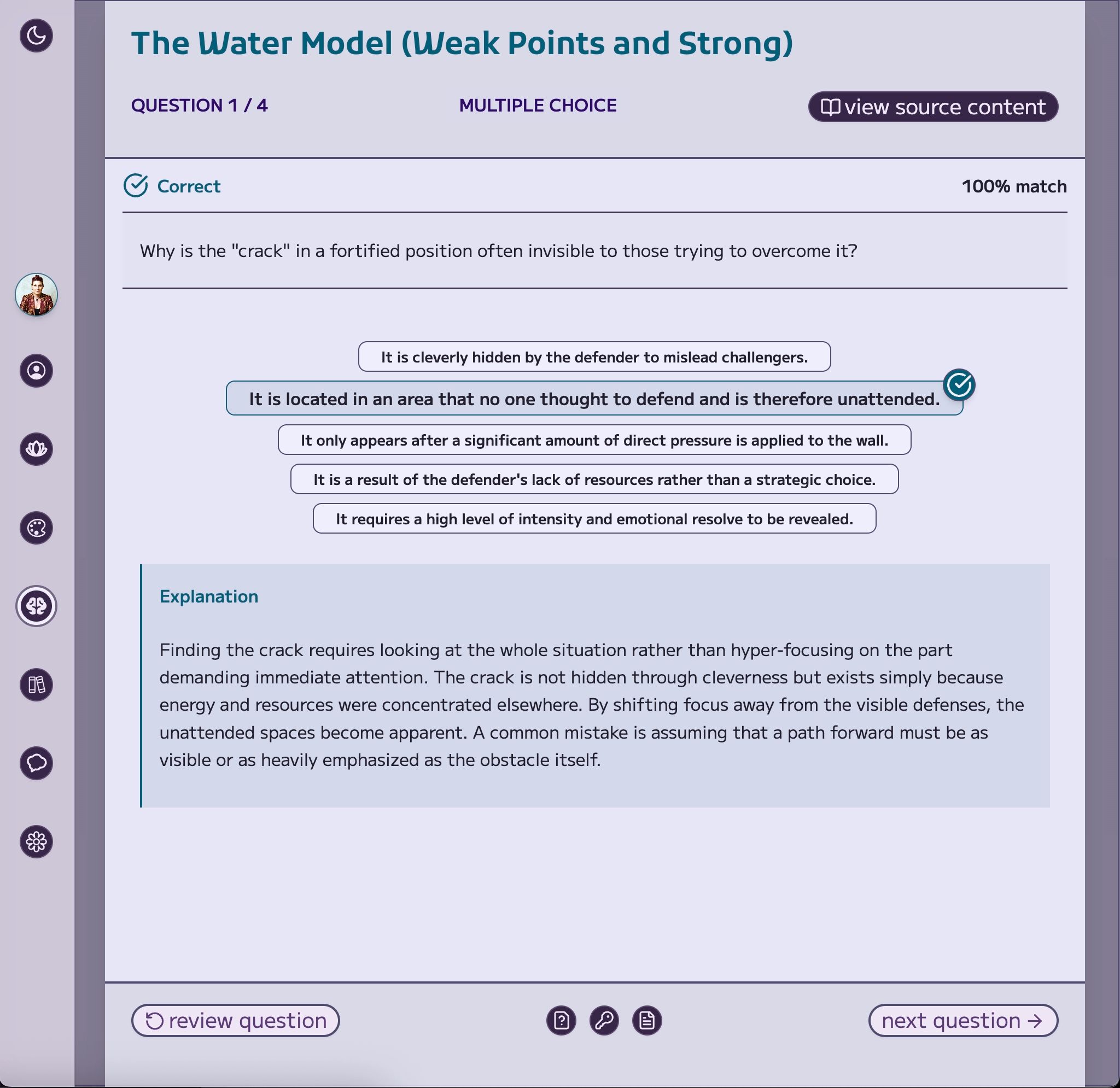
So the demo builds every question, answer, and explanation from your source and nothing else, then lays your material out as a clean reading you can open anytime. The explanation points back at the text rather than improvising. This same grounding is the rule inside Lumi Forge.
The Gift of Being Wrong
Most of us learned to treat a wrong answer as a small humiliation, and I would love to gently undo that. A wrong answer, examined honestly, shows you exactly where your understanding bends, which is the only place real repair can start.
When you miss a question and read the grounded explanation, that little jolt of "oh, that is why" is the repair happening in real time. Lumi Forge builds a whole learning economy around this, rewarding the wrestle whether you land it or not, because comprehension lives in the grappling. Being wrong is an invitation rather than a flaw.
Made to Be Printed and Shared
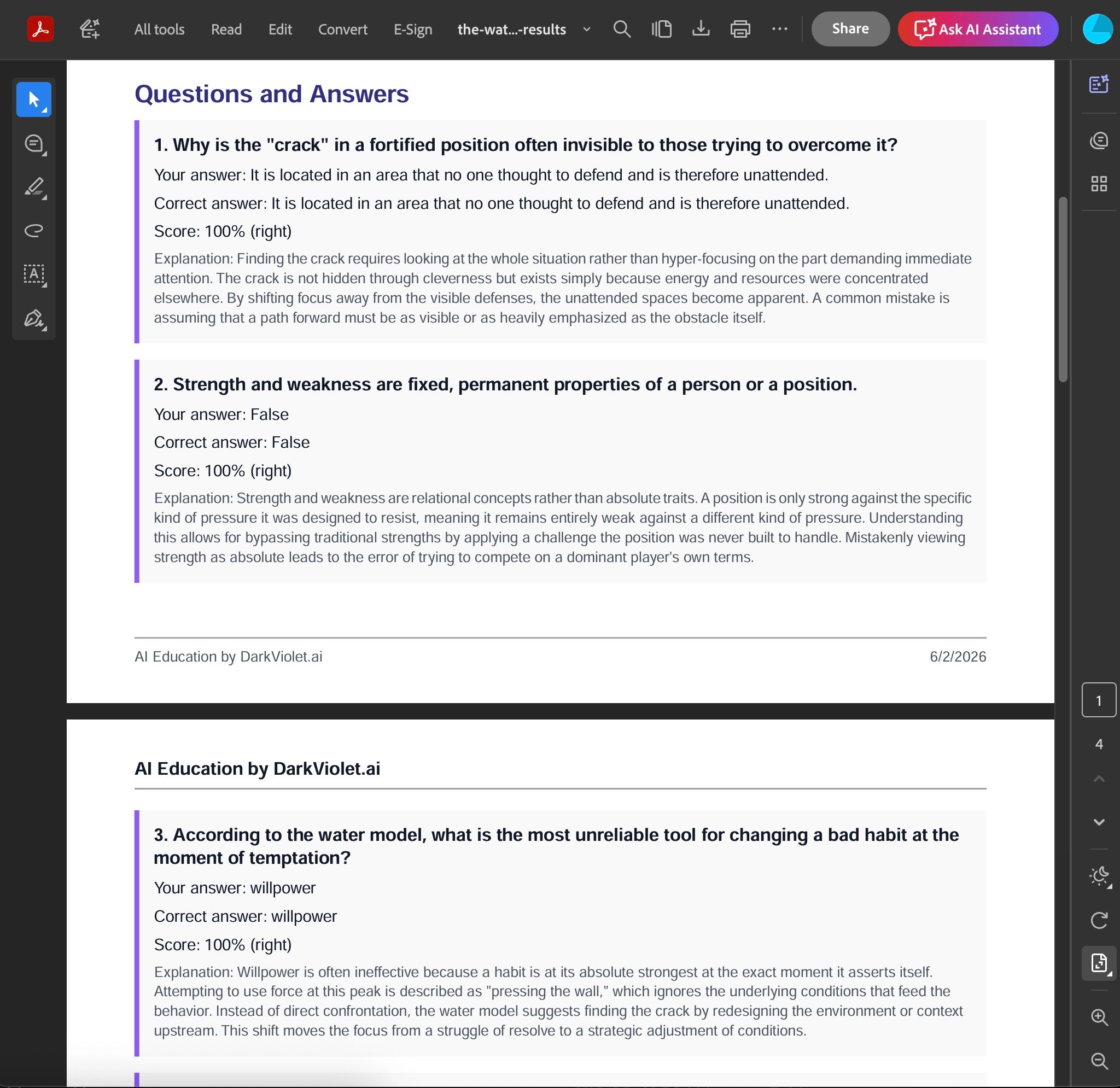
When the questions are ready, the demo does not keep them locked inside the browser. You can print the whole exercise as a PDF in four shapes: a blank worksheet, a separate answer key, the completed set with every answer and explanation, and the formatted original content as a clean reading on its own.
The flexibility is the point, because it hands the decision back to you. A teacher can print a worksheet and an answer key from their own material in a single pass, and a learner can work through the blank version with a pen. The AI handles the building and formatting, and you decide how the learning actually happens. That is amplification in the plainest terms I know.
Scaling Up
The demo is one small slice. Lumi Forge is where these ideas stretch out to full size, built as much for the people who teach as for the people who learn. A creator brings a single body of work, and the platform's human-centered AI helps shape it into a polished lesson, dozens of checkpoints, content for five learning games, and swipeable micro-lessons, all in minutes.
For the learner, the part I love most is the companion panel beside the reading. It knows the specific material you are in, so when a framing is not landing, you can ask it to explain the idea another way, right when the question is fresh. A static page has never been able to do that.
Becoming More Human
When I reduce all of this to its essence, the same quiet idea is sitting underneath. The most exciting thing about AI in learning is how much more human it can let us be. It can take the tedious parts off our plates and free us to focus on the best parts: the curiosity, the struggle, the slow satisfaction of finally understanding, and the joy of helping someone else get there too.
When we ask AI to do our thinking, we end up a little smaller, blander, and maybe even dumber. When we ask it to amplify our thinking, we end up sharper, and so do the people we teach. The demo lives on DarkViolet.ai, and the fuller experience lives at LumiForge.io.